The fourth PPP workshop was held on 23 June 2021 and it focused on the keys ideas regarding sustainable packaging materials, as well as packaging programmes and models.
As More than 100 business representatives from different industries, such as packaging producers, food manufacturers and retailers, were virtually present.
As Mr Simon Eng, Head of QA, CI and Training of RedMart, shared about the operation process of RedMart and how packaging waste was generated throughout its operation. He also shared on the efforts and initiatives that the E-commerce industry, specifically RedMart, has done with regards to packaging sustainability. Mr Eng explained how some products needed packaging (e.g. raw meat products) to be separated from other products, in line with food safety requirements and to prevent spoilage.
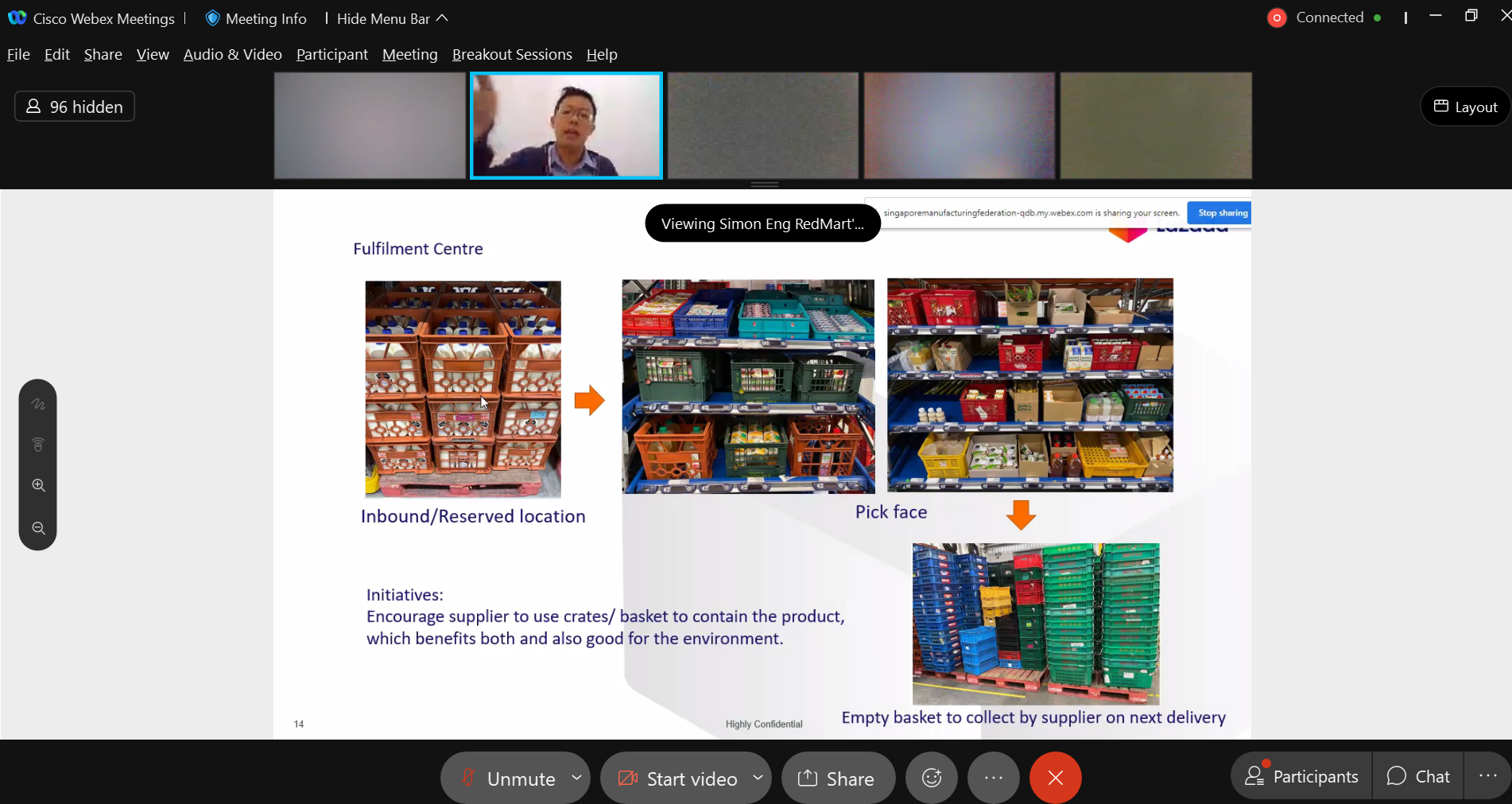
Mr Simon Eng shared that RedMart encourages their suppliers to deliver products to them in reusable crates or baskets.
As Mr Eng gave examples of RedMart’s go-green initiatives for the packaging of their house-brand products. These include RedMart’s increase of recycling content in their plastic bottles and carton boxes, which help reduce the amount of virgin material used. Other initiatives adopted include the reuse of RedMart’s carton boxes and cold chain consumables, and the recycling of carton boxes and shrink wrap from the delivery of goods. RedMart uses different carton box sizes to reduce the amount of excessive packaging used, while saving on transport capacity and reducing carbon emissions.
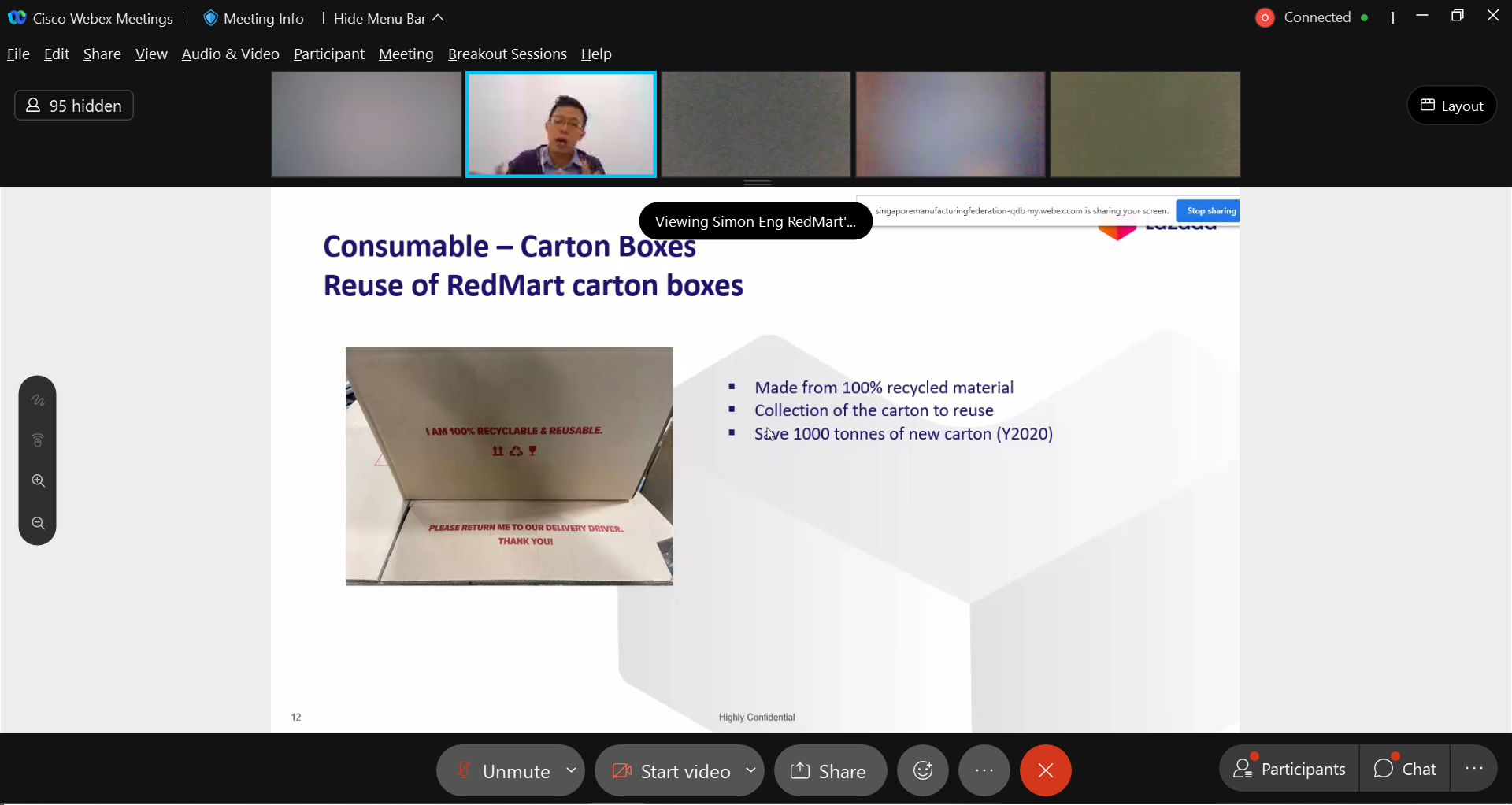
Mr Simon Eng shared on the go-green initiatives for their house-brand products.
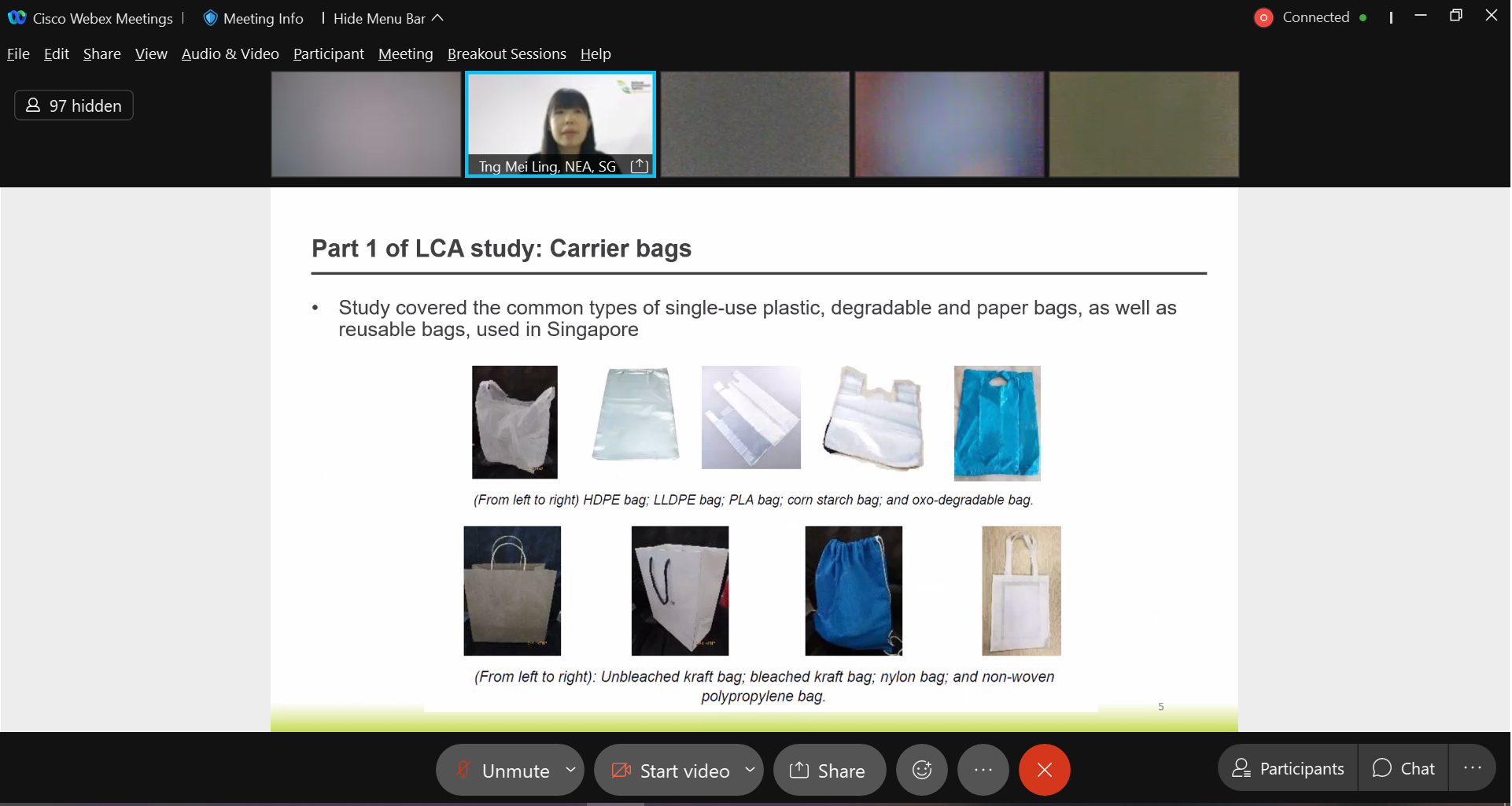
Ms Tng Mei Ling shared on the LCA study on single-use plastic, degradable and paper bags, as well as reusable bags.
Ms Tng Mei Ling, Deputy Director of NEA, shared on the Life Cycle Assessment (LCA) of disposables and reusables conducted by NEA, providing an overview of the LCA on Carrier Bags and Food Packaging.
She introduced the different impact each type of packaging has on the environment, as well as the local waste management context in Singapore. The importance of the reduction of the excessive consumption of packaging and disposables, instead of material substitution was highlighted. More information about the study mentioned can be found at https://www.nea.gov.sg/docs/default-source/media-files/news-releases-docs/cos-2018-media-factsheet-for-lca-study-findings-updated.pdf.
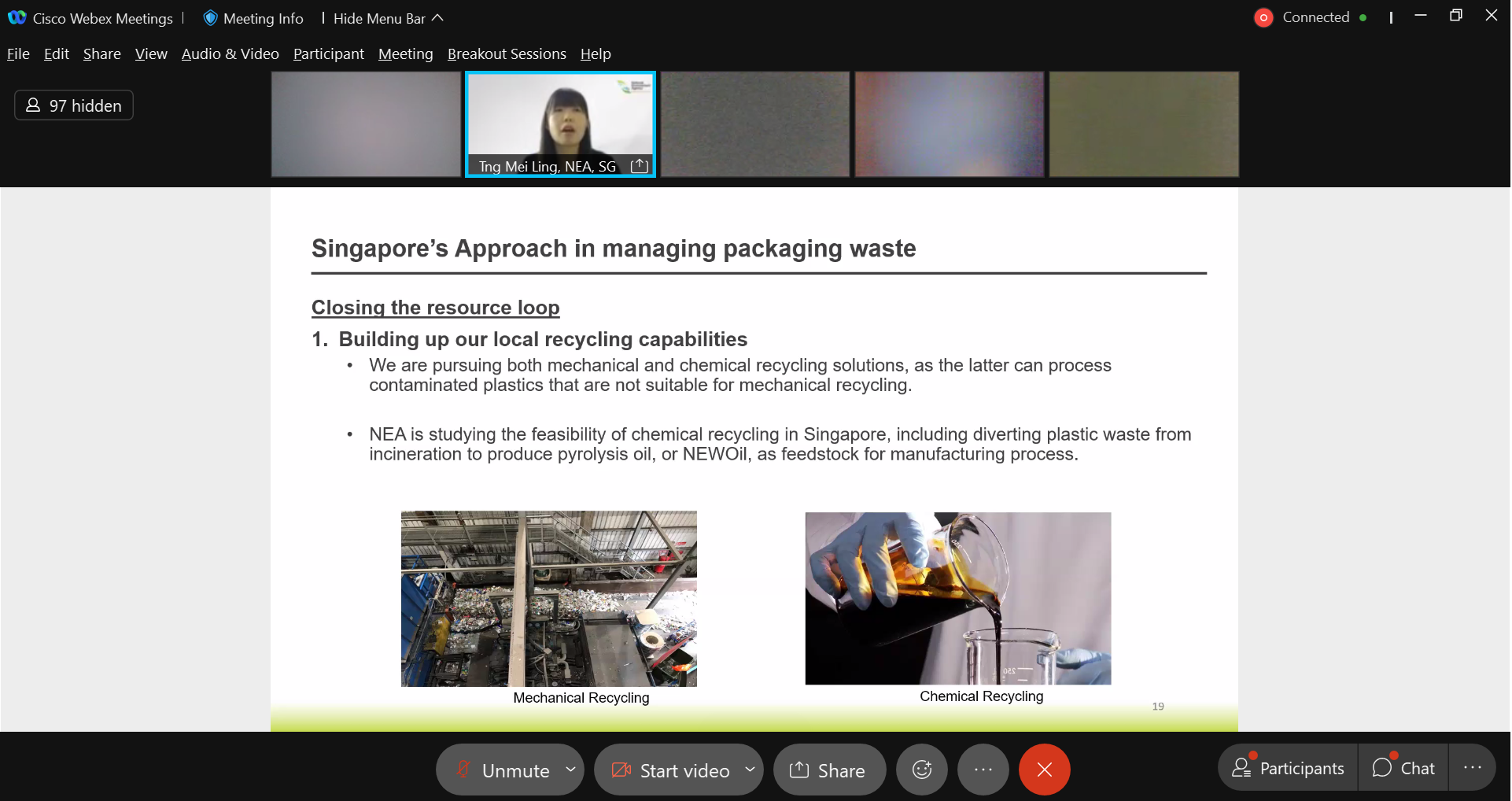
Ms Tng Mei Ling shared on Singapore’s approach in managing packaging waste though building the capabilities of the recycling facilities in Singapore.
Ms Tng also shared about the various initiatives in Singapore’s waste management such as the Mandatory Packaging Reporting (MPR), Deposit Refund Scheme (DRS) under the Extended Producer’s Responsibility (EPR) framework and consumer engagement through campaigns such as the “Say YES to Waste Less” campaign. She also shared that NEA was pursuing both mechanical and chemical recycling solutions, and the latter can process contaminated plastics that were not suitable for mechanical recycling. This would help bring Singapore closer to a circular economy.
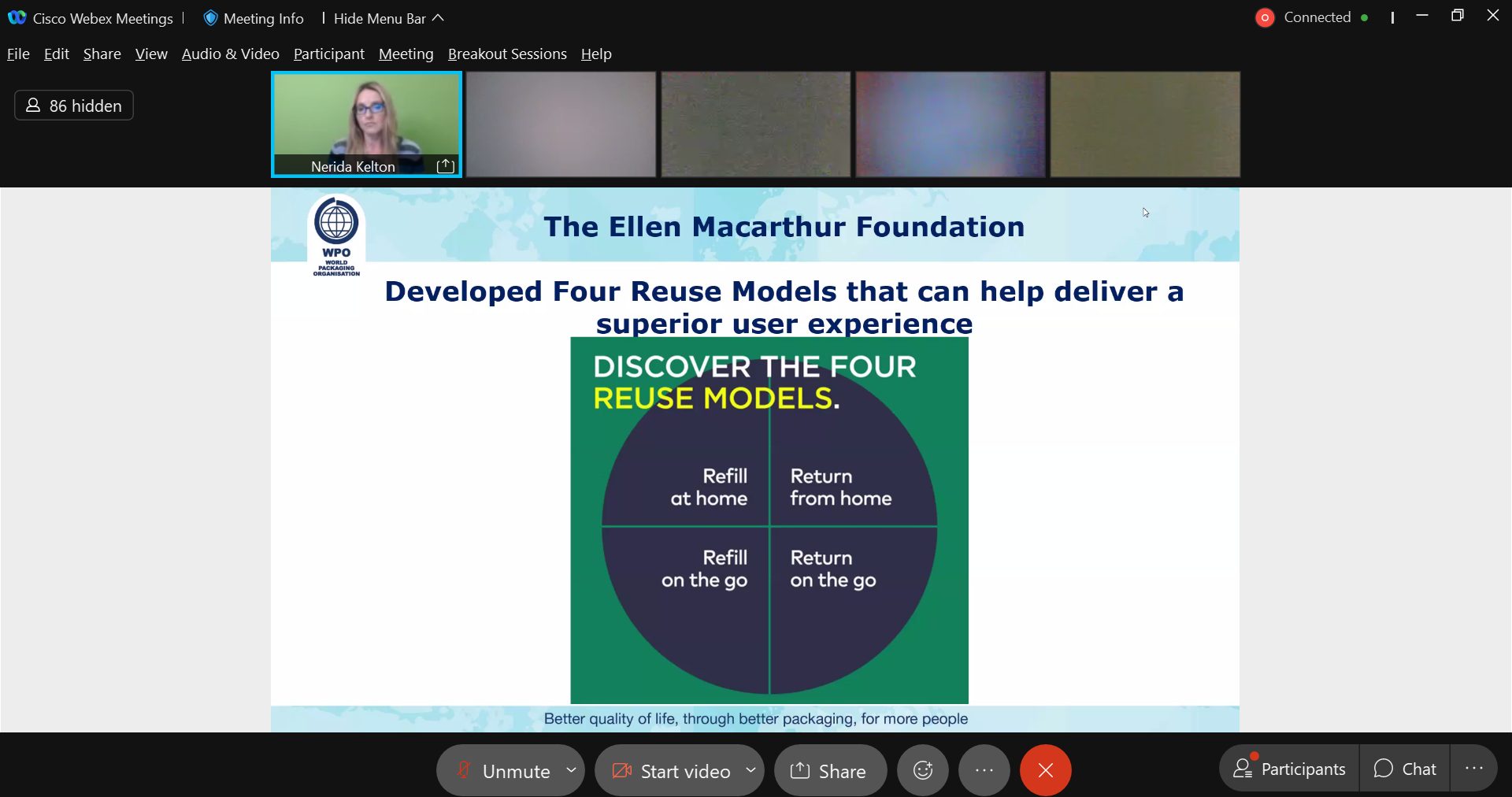
Ms Nerida Kelton shared about the Reusable & Refillable models.
Ms Nerida Kelton, Vice President of Sustainability & Save Food in the World Packaging Organisation, shared about the reduction of unnecessary packaging and the shift towards Reusable & Refillable programmes being practiced across the world. She provided insights and listed benefits to the various reusable & refillable models. As according to the Ellen Macarthur Foundation, the reuse model can cut costs, adapt to individual needs, optimise operations, build brand loyalty, improve user experience, and gather intelligence.
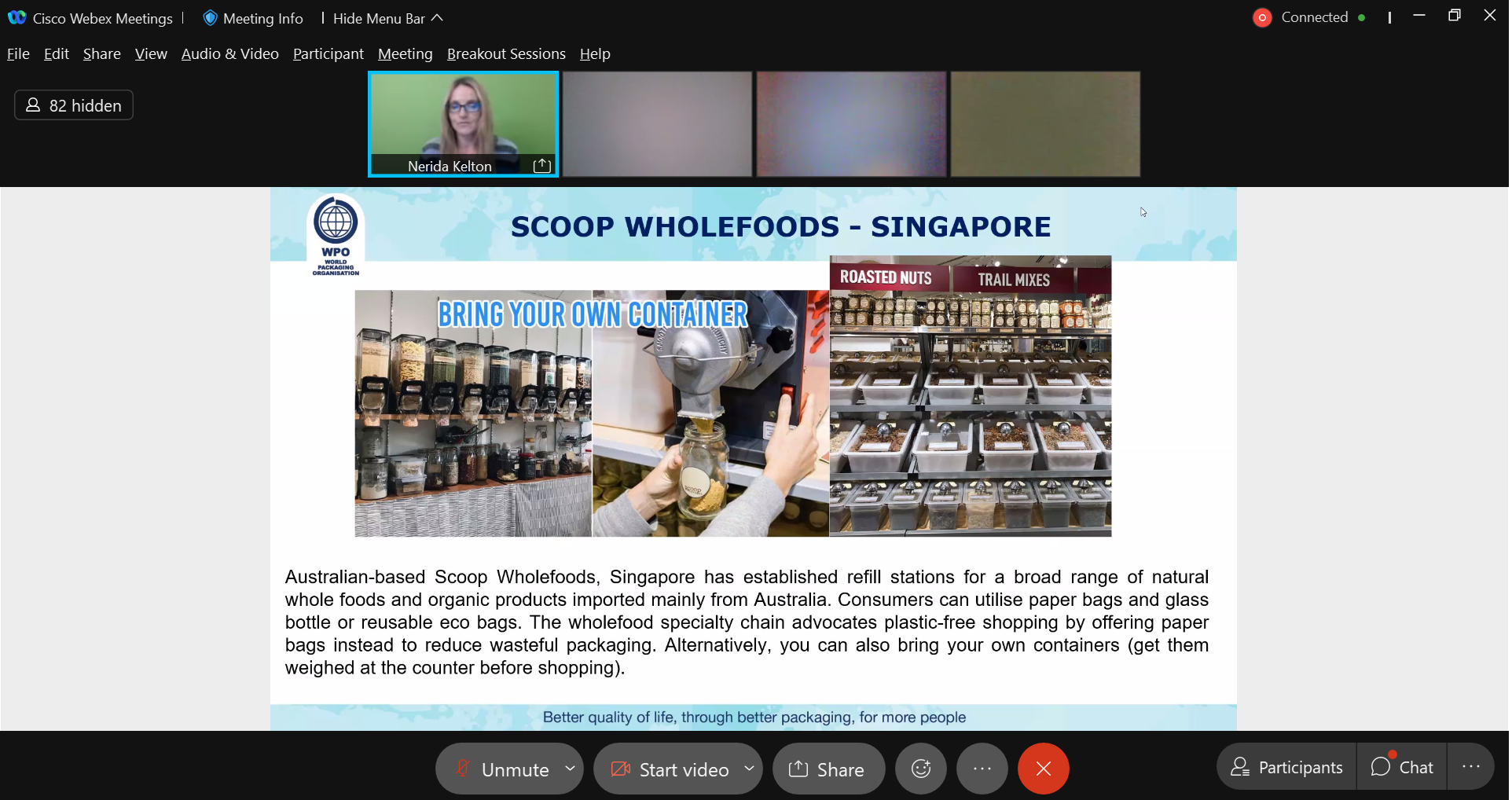
Ms Nerida Kelton shared examples of the refillable models in Singapore and around the world.
Ms Kelton shared examples of companies in Europe and Australia that had started the shift towards reusable and refillable packaging. In addition, Ms Kelton shared on local Singapore companies, such as Unpackt and The Social Space, that have found success offering food and cleaning products using these models. Customers are encouraged to bring their own containers to contain the products. However, she highlighted that clear communication to the customers is important to help them understand the model, and to avoid any misconceptions whilst maintaining a high standards of food safety and hygiene practice.
